
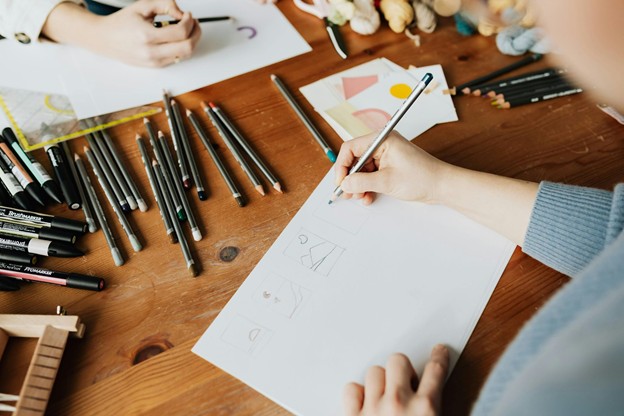
Busy parents juggling work and family, overloaded professionals, and caregivers running on empty often recognize the same pattern: chronic stress flattens mood, fragments focus, and makes even small decisions feel heavy. The challenge is that common stress management advice can turn into another task to complete, which only tightens the loop. Creative stress relief methods offer a practical way to step out of that cycle by giving the mind a safer place to land and the body a clear signal to downshift. When mental health and creativity reconnect, stress starts to feel more workable.
How Creative Hobbies Calm the Stress System
Creative hobbies help your body shift out of “high alert.” Research suggests making art, music, writing, or crafts can nudge brain chemicals tied to reward and calm, quiet threat-focused thinking, and give emotions a safer route to move through you.
That matters because stress is not only a feeling. It is a full-body pattern that affects sleep, patience, and decision-making. A creative practice can shorten the time you stay stuck in tension and make relief feel more accessible.
Picture a long day of demands, then 15 minutes of sketching or shaping clay. Your attention narrows to color, texture, and small choices, which relaxes mental noise. The page also “holds” feelings you cannot easily say out loud.
Turn Feelings Into Images: Try a 10-Minute AI Art Prompt Practice
Once you understand how creativity helps settle the stress response, it can be surprisingly relieving to give your feelings a shape you can actually see. A quick way to do that is to experiment with AI art generation by translating what’s in your head into a few prompt ingredients, your current emotion, a couple of adjectives, and a vibe or setting, then iterating on what comes back. When the image doesn’t quite match, tweak the words and run it again; the point isn’t “good art,” it’s using a simple, low-pressure loop to externalize and explore what you’re feeling. You can type in descriptive phrases to generate unique images that align with your emotions, and browsing examples of AI art prompts can help you find language that fits what you’re trying to express.
Creative Hobbies Compared by Effort and Payoff
This comparison highlights a few creative hobbies for anxiety reduction by how quickly they can lower tension, how accessible they are, and what to watch for. Use it to choose an option that matches your current energy, time, and comfort level, so the activity supports you instead of becoming another task.
| Option | Benefit | Best For | Consideration |
| Sketching or doodling | Fast externalization of feelings and mental clutter | Busy days, quick resets, waiting-room stress | Perfectionism can creep in; set a time limit |
| Journaling with prompts | Clarifies thoughts, builds emotional insight | Rumination, decision fatigue, anxious mornings | Can intensify feelings; end with a grounding note |
| Music making or drumming | Regulates arousal through rhythm and breath | Restlessness, anger, energy spikes | Noise may be limiting; use headphones or soft percussion |
| Knitting, crochet, or hand sewing | Repetitive motion supports calm and focus | Overwhelm, screen fatigue, evening wind-down | Requires basic supplies and practice to start |
| Dance or movement improvisation | Releases tension through embodied expression | Somatic stress, stuck emotions, low mood | Self-consciousness is common; start privately |
If you feel mentally overloaded, text-based or pencil-based options often work well; if your body feels keyed up, rhythm or movement may bring relief faster. The “best” choice is the one you will actually do for five minutes today, and that is enough to begin.
Daily Creative Habits That Make Stress Feel Manageable
Small, repeatable creative actions train your brain to shift gears on purpose, not only when you hit a breaking point. Aim for consistency over intensity, since the median time for habit formation is longer than most people expect.
Five-Minute Creative Reset
- What it is: Set a timer and make anything, without fixing or judging it.
- How often: Daily
- Why it helps: A tiny start lowers resistance and interrupts spiraling thoughts.
Same-Time Supply Spot
- What it is: Keep one small kit visible, like a notebook and pen.
- How often: Weekly reset
- Why it helps: Fewer decisions makes starting feel almost automatic.
Prompt Then Ground
- What it is: Write one prompt, then end with three sensory details.
- How often: 3 times weekly
- Why it helps: You process feelings, then return to the present.
Rhythm to Regulate
- What it is: Tap a steady beat while taking slow, even breaths.
- How often: As needed
- Why it helps: Rhythm supports calmer pacing in your body.
Before-Bed Stitch or Sketch
- What it is: Do one row or one page before screens.
- How often: Nightly
- Why it helps: Repetition signals safety and helps you wind down.
Turn Creative Hobbies Into a Steady Stress-Relief Practice
Stress tends to pile up when life feels nonstop, and willpower alone can’t keep the nervous system calm. A creative coping strategy, returning to simple making with a gentle, repeatable mindset, offers a reliable way to regulate emotions and keep perspective. Over time, the long-term benefits of creativity show up as more steadiness, clearer self-trust, and real empowerment through arts, even on difficult days. Small creations can carry big stress when practiced consistently. Choose one outlet today and set a five-minute appointment for it, then let the act of transforming stress with art support resilience, health, and everyday performance.